| Theories and Techniques of Oral Implantology (vol.2) (published 1970) | Dr. Leonard I. Linkow |
 Previous Page Previous Page
|
Next Page 
|
| This is an archival HTML version of this book originally hosted here in 2006. The HTML may not display well on modern browsers. Please view the modern PDF Version for a better viewing experience. |
660 Theories and techniques of oral implantology
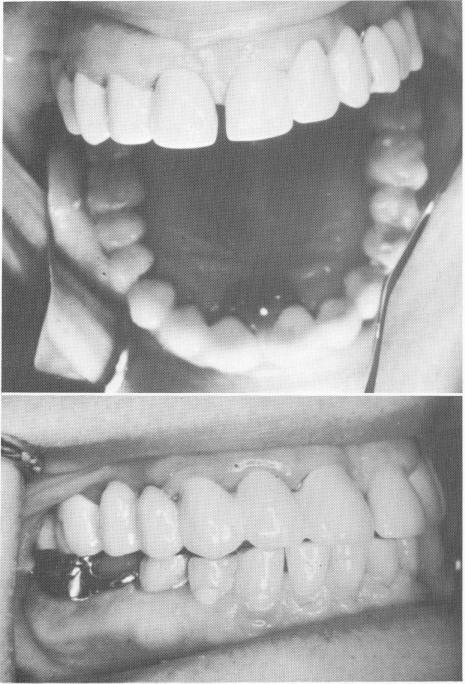
Fig. 15-102. The two posterior segments fit over the anterior cantilevered thimble posts and over the protruding implant posts. Note the palatal connecting plate.
Fig. 15-103. The three sections were cemented in with hard cement, and the occlusion was carefully balanced.
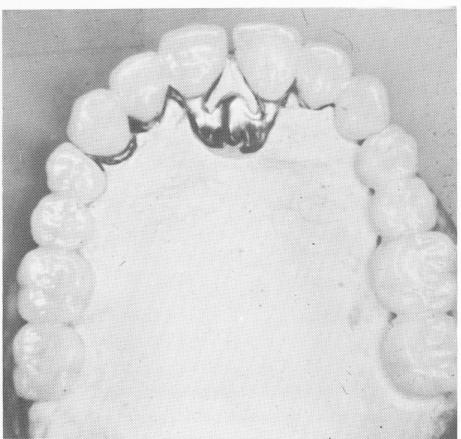
bite taken. From the master stone model the anterior prosthesis was fabricated in porcelain baked to metal. The left and right quadrants were joined with a palatal plate soldered to both palatal extensions and designed to fit passively over the soft tissues. Two gold cantilevered, thimble type pontics ex-tended distally from each side of the anterior restoration (Fig. 15-100).
The anterior prosthesis was fitted over the anterior tooth preparations, and then blade implants were placed into both posterior edentulous areas (Fig. 15-101) . After healing, a full mouth, hydro-colloid impression was taken, accurately duplicating the implant posts and the cantilevered thimble pontics. The two posterior unilateral fixed partial dentures were processed (Fig. 15-102). The finished bridges were then cemented in the mouth and the occlusion carefully balanced (Fig. 15-103).
Several advantages are gained by the method described. The restored central incisors can be kept relatively narrow mesiodistally and the diastema maintained. All anterior teeth can be splinted to one another by the soldered castings and palatal connecting plate. The posterior implant abutments permit stabilizing the anterior quadrant of teeth with a full arch fixed prosthesis. The full arch fixed restoration also greatly reduces buccolingual movements of the posterior implants, as well as labiolingual movements of the anterior teeth.
Case 11
Designing restorations for a patient with a severe brux habit
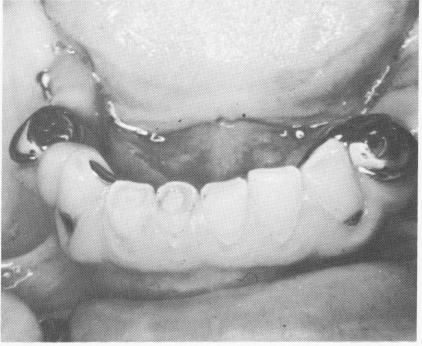
The anterior mandibular teeth of a 57-year-old man were worn down well into the dentin from
Fig. 15-104. The patient's teeth were worn down from severe bruxism.
|
Previous Page
|
Page 660 |
Next Page
|
|
Copyright warning: This information is presented here for free for anyone to study online. We own exclusive internet copyrights on all content presented on this website. We use sophisticated technology to identify and legally close down websites that reproduce copyrighted content without permission - so please don’t do it.
|