| Theories and Techniques of Oral Implantology (vol.2) (published 1970) | Dr. Leonard I. Linkow |
 Previous Page Previous Page
|
Next Page 
|
| This is an archival HTML version of this book originally hosted here in 2006. The HTML may not display well on modern browsers. Please view the modern PDF Version for a better viewing experience. |
624 Theories and techniques of oral implantology
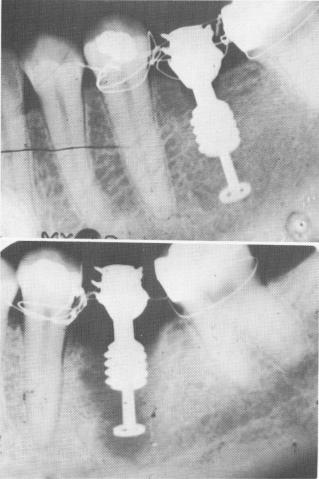
Fig. 14-34. A, Another single tooth implant, stabilized only by wiring to neighboring teeth. B, A few months later, the mobility allowed by this method has caused a great deal of bone resorption.
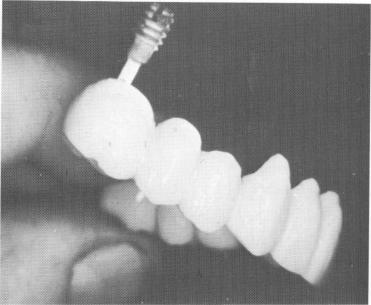
Fig. 14-35. Cements, whether of a temporary or more permanent type, should never be used inside the crown that covers the implant. In this case, the cement stuck to the implant post, pulling it out with the splint.
shafts and natural tooth abutments immediately after the implants are inserted. In many cases this eliminates possible complications.
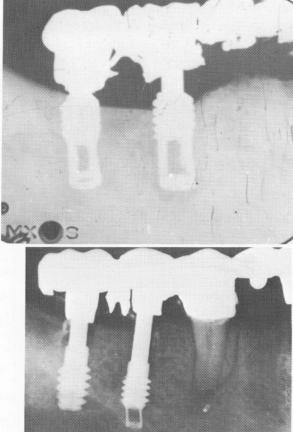
Pontic impingement on the soft tissues. Severe pain can be caused by the impingement of the pontics or implant crowns on the fibromucosal tissue (Fig. 14-37). The most bothersome areas are where the buccogingival line angles meet the underlying mucosal tissue.
A prefabricated appliance, particularly its bucco-
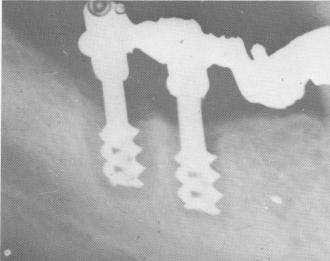
Fig. 14-36. Bone resorption is seen around these two spiral posts because the temporary acrylic splint was worn much too long and loose, thereby loosening the implants.
Fig. 14-37. A, Overhanging margins cause food impaction, which leads to bone resorption. Also, impingement of the overhanging crowns can cause severe pain, inflammation, and swelling to the soft tissue in the areas of the implants, which can lead to bone resorption. B, Also shows perforation of the mandibular canal with the anterior vent-plant.
gingival line angles, should be checked carefully prior to an implant intervention by having the patient wear the prosthesis temporarily for a day. Impingement marks can easily be seen on the soft tissue (Fig. 14-38) and the offending areas removed from the tissue-bearing surface of the involved pontics. If any adjustments have proved necessary, permanent cementing of the prosthesis in place should be postponed until the patient wears the prosthesis temporarily for a few more days. After the prosthesis proves
A
B
A
B
|
Previous Page
|
Page 624 |
Next Page
|
|
Copyright warning: This information is presented here for free for anyone to study online. We own exclusive internet copyrights on all content presented on this website. We use sophisticated technology to identify and legally close down websites that reproduce copyrighted content without permission - so please don’t do it.
|