| Theories and Techniques of Oral Implantology (vol.2) (published 1970) | Dr. Leonard I. Linkow |
 Previous Page Previous Page
|
Next Page 
|
| This is an archival HTML version of this book originally hosted here in 2006. The HTML may not display well on modern browsers. Please view the modern PDF Version for a better viewing experience. |
Endosseous blade implants 527
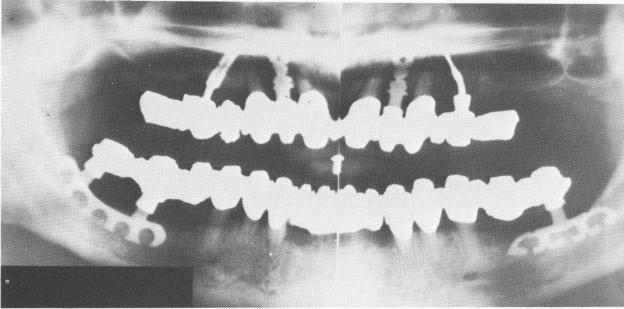
Fig. 11-206. The single tooth blades in the maxillae help stabilize anterior periodontally involved teeth. Some of these blades are obliquely set to avoid the maxillary sinus. In the mandible mesiodistal blades act as posterior abutments.
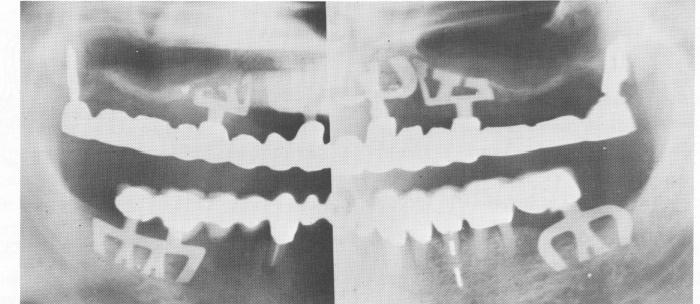
Fig. 11-207. These asymmetrical blades were specially designed to avoid penetrating the sinuses yet give maximum contact with bone.
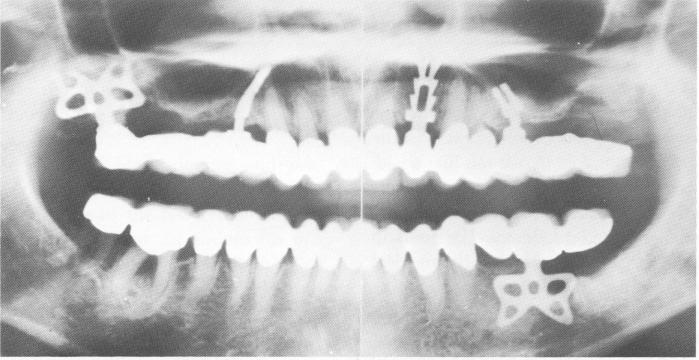
Fig. 11-208. Another series of blade designs. In this maxilla there is a mesiodistal blade in the right tuberosity, an obliquely placed buccopalatal blade in the right bicuspid area avoiding the sinus, a single tooth blade in the left central incisor region, and a transverse oblique, mesially directed blade in the left second bicuspid area avoiding the anterior extent of the antrum. The mandible contains a mesiodistal blade.
|
Previous Page
|
Page 527 |
Next Page
|
|
Copyright warning: This information is presented here for free for anyone to study online. We own exclusive internet copyrights on all content presented on this website. We use sophisticated technology to identify and legally close down websites that reproduce copyrighted content without permission - so please don’t do it.
|