| Theories and Techniques of Oral Implantology (vol.2) (published 1970) | Dr. Leonard I. Linkow |
 Previous Page Previous Page
|
Next Page 
|
| This is an archival HTML version of this book originally hosted here in 2006. The HTML may not display well on modern browsers. Please view the modern PDF Version for a better viewing experience. |
528 Theories and techniques of oral implantology
Fig. 11-209. A double-posted, mesiodistal blade lies below the sinus floor.
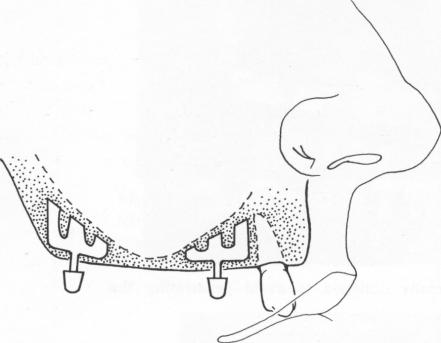
Fig. 11-210. To avoid the sinus, specially designed blades can be used anterior and posterior to it.
Buccopalatal blades in tuberosities
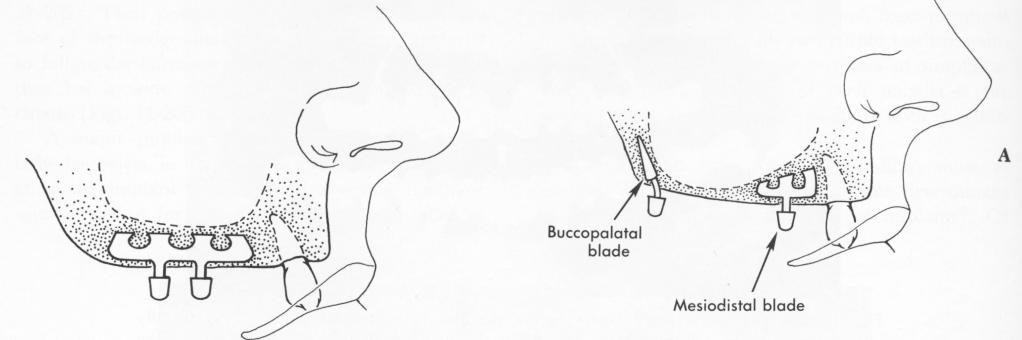
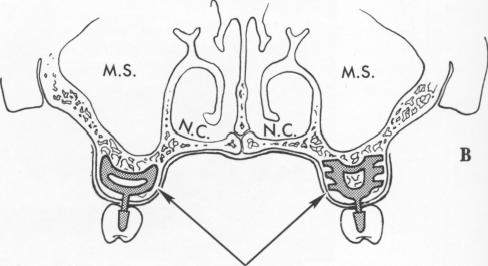
Fig. 11-211. When there is very little bone distal to the sinus, a buccopalatal blade may be used. A, The buccopalatal blade is angled into what little bone remains, its post bent parallel to the other implant abutment and the natural tooth. B, The exact location of the buccopalatal blade is clear in this cross section through the maxillary tuberosities. The blade is wedged against the cortical plates. M.S., Maxillary sinus; N.C., nasal cavity.
course, conclusions drawn from radiographs must be confirmed by exposing the bone to reveal its true landscape.
When there is a good amount of alveolar bone between the floor of the sinus and the crest of the ridge, a single double-posted blade may be used in each maxilla (Fig. 11-209) . This is actually an ideal situation. Surgery is needed in only one place on each side of the jaw, since it is the number and placement of the abutment posts—not necessarily the number of implants that determines the amount of support for the bridge.
Several alternatives exist if there is little or no bone below the maxillary sinus. There may be a good deal of bone just anterior and posterior to the extensions of the sinus. Specially designed blades in
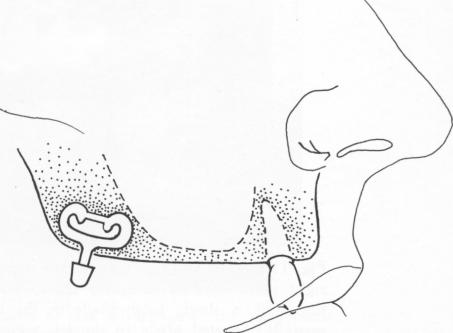
Fig. 11-212. One method of setting a blade in the maxillary tuberosity is mesiodistally.
|
Previous Page
|
Page 528 |
Next Page
|
|
Copyright warning: This information is presented here for free for anyone to study online. We own exclusive internet copyrights on all content presented on this website. We use sophisticated technology to identify and legally close down websites that reproduce copyrighted content without permission - so please don’t do it.
|