| Theories and Techniques of Oral Implantology (vol.1) (published 1970) | Dr. Leonard I. Linkow |
 Previous Page Previous Page
|
Next Page 
|
| This is an archival HTML version of this book originally hosted here in 2006. The HTML may not display well on modern browsers. Please view the modern PDF Version for a better viewing experience. |
284 Theories and techniques of oral implantology
implants must bear all the stress, and they could loosen.
Hard cements. Until recently, oxyphosphate of zinc cement has been used with fairly good results. However, the typical implant patient has very few teeth remaining, and these are often mobile or sensitive. Thus oxyphosphate of zinc occasionally inflames the pulp of these teeth, necessitating the removal of their nerves by drilling holes through the occlusal surfaces of the completed pros-
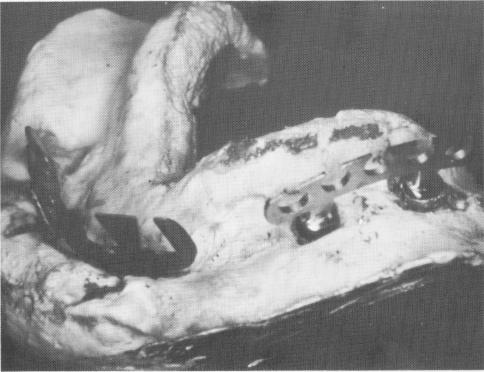
Fig. 7-66. Duplicate blades set in plaster index.
thesis. In addition to nerve problems, the cement at times breaks away from natural teeth whose preparations are too tapered.
The newer polycarboxylate cements seem preferable to the oxyphosphate of zinc cements. These are extremely hard, bind well, and are completely nonirritating to the pulp. Linkow has been using two of these polycarboxylate cements solely since their introduction to the dental profession with excellent results.*
Acrylics. Formerly, Linkow used a quick-cure resin material inside the implant crowns of a pre-fabricated fixed partial denture as a binder. This method was especially handy if the implants were not parallel to each other. In such situations, the acrylic did not appear to wash out as readily as would have an oxyphosphate of zinc cement. How-ever, Linkow has found that when acrylic is used in this manner, there is a chance of its hardening very unevenly underneath the crowns and against the underlying soft tissues. This causes a great deal of discomfort, irritation, and inflammation. There-fore, before the acrylic hardens the bridge should be removed and allowed to set outside the mouth, preferably in hot water. It is then trimmed and polished
*Durelon (Premier, Federal Republic of Germany [West Germany]) and Poly C (de Treys, Amalgamated Dental Trade Distributors Ltd., London, England).
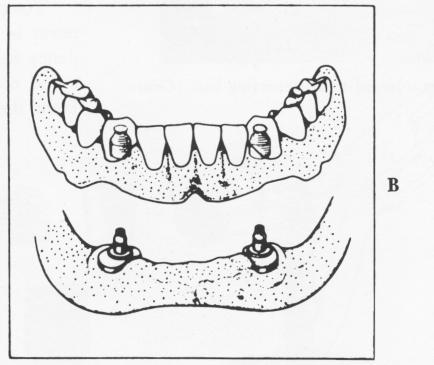
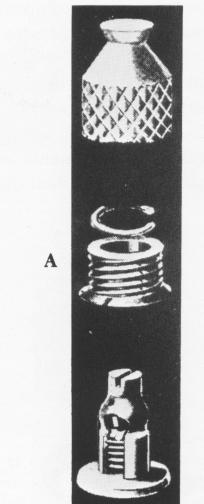
Fig. 7-67. A solid Gerber attachment. A, An exploded view of the parts; B, its utilization. (Courtesy American Precision Metals.)
|
Previous Page
|
Page 284 |
Next Page
|
|
Copyright warning: This information is presented here for free for anyone to study online. We own exclusive internet copyrights on all content presented on this website. We use sophisticated technology to identify and legally close down websites that reproduce copyrighted content without permission - so please don’t do it.
|