| Maxillary Implants (published 1977) | Dr. Leonard I. Linkow |
 Previous Page Previous Page
|
Next Page 
|
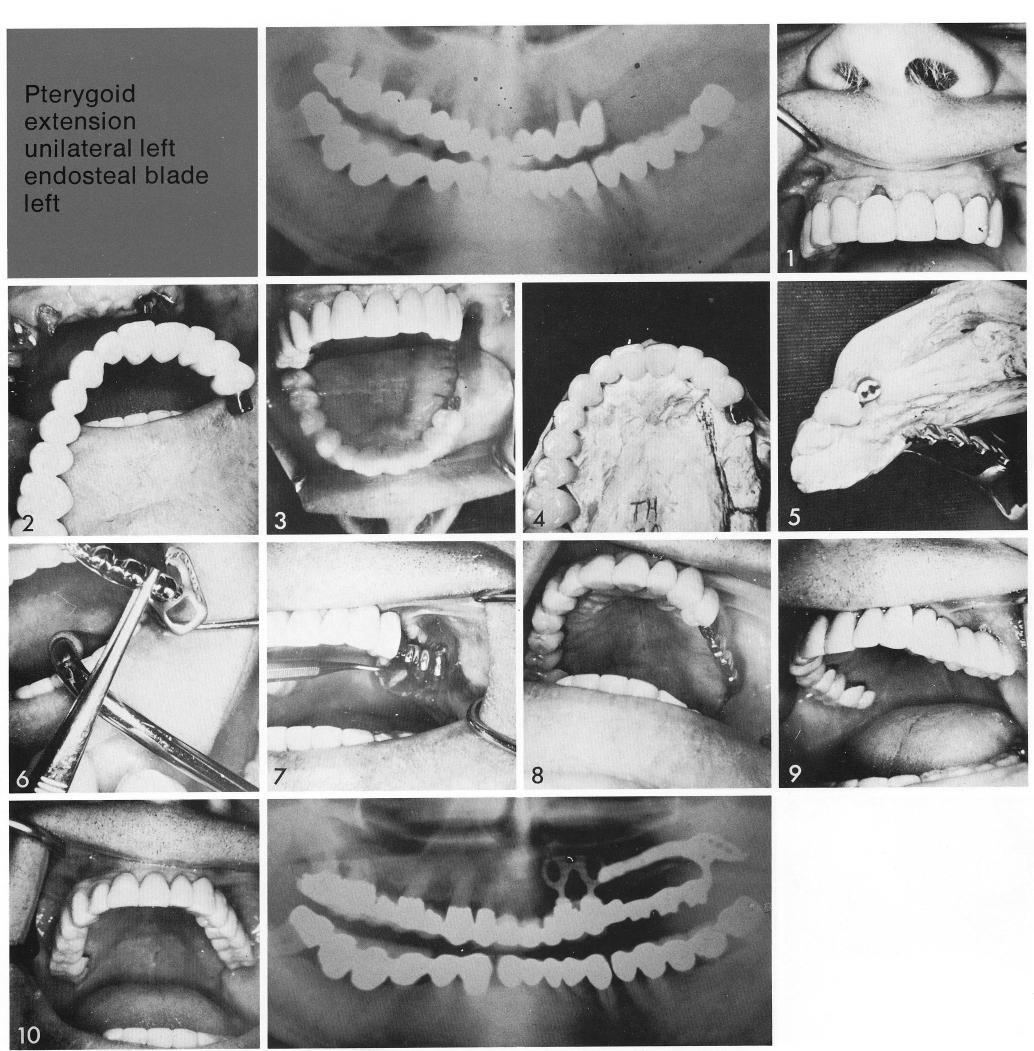
Pterygoid extension unilateral left
endosteal blad
left
The patient's old appliance was unattractive (1) and unstable. An open-socket bladevent was placed in the left anterior cuspid region, and a restoration designed to include the natural and bladevent abutments (2). Cantilevered from this was a figure-eight female lock included inside a smooth surfaced pontic (3). The implant was designed to engage this attachment (4,5). Note that the prosthesis bearing portion of this particular pterygoid extension implant arises from a cross-strut across the tuberosity (6), not from the hamular notch—a distinct advantage for easier closing of the mouth. This also places the bar in attached gingiva, rather than in the loose areolar mucosa of the hamular notch area. The finished splint is cemented to the implant, completing the restoration (9,10).
243
|
Previous Page
|
Page 243 |
Next Page
|
|
Copyright warning: This information is presented here for free for anyone to study online. We own exclusive internet copyrights on all content presented on this website. We use sophisticated technology to identify and legally close down websites that reproduce copyrighted content without permission - so please don’t do it.
|