| Theories and Techniques of Oral Implantology (vol.2) (published 1970) | Dr. Leonard I. Linkow |
 Previous Page Previous Page
|
Next Page 
|
| This is an archival HTML version of this book originally hosted here in 2006. The HTML may not display well on modern browsers. Please view the modern PDF Version for a better viewing experience. |
598 Theories and techniques of oral implantology
lize a few of his remaining weak anterior teeth (Fig. 13-34), and vent-plants were used posteriorly in both edentulous areas (Fig. 13-35). A full arch acrylic-and-gold fixed denture was then fabricated and cemented into position with hard cement (Fig. 13-36). Fig. 13-37 shows the intraoral radiographs.
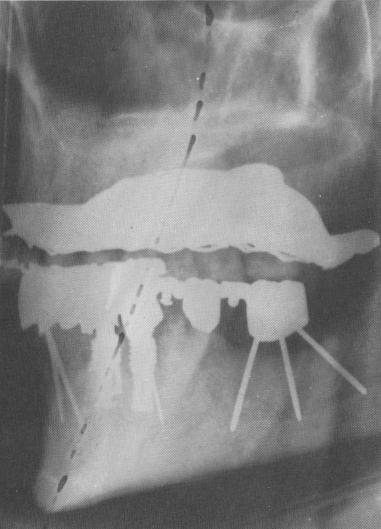
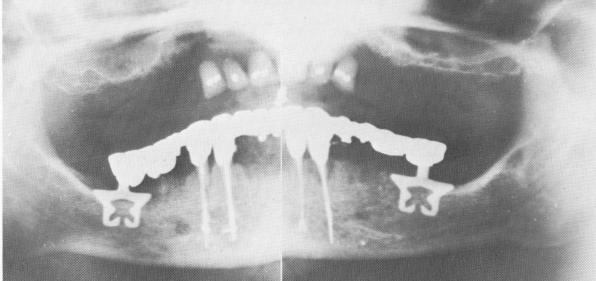
Other cases of stabilizing anterior mandibular teeth with endodontic implants and using other types of endosseous implants laterally are shown in Fig. 13-38. Note that the type of prosthodontic implant selected is determined by the local anatomy of the site.
In cases where insufficient bone exists to use
endosseous implants with endodontically stabilized natural teeth, subperiosteal implants may be suit-able. Several unilateral, finger type subperiosteal implants have been used successfully in combination with endodontic root stabilizers to help support a fixed denture (Fig. 13-39) .
Another unique combination of endodontic pin implants with other types of implants is seen in the case of a woman well into her seventies. This patient had been wearing a partial denture that utilized her remaining two lower bicuspid teeth as the abutments. She was in constant pain because the denture rested on an extremely thin knife-edge
A
B
Fig. 13-38. A, A lateral plate roentgenogram shows another case of anterior endodontic root stabilizers in combination with vent-plants and a posterior triplant. B, A Panorex showing four stabilized anterior teeth working in symbiosis with two posterior blades, all of which support a full arch restoration.
|
Previous Page
|
Page 598 |
Next Page
|
|
Copyright warning: This information is presented here for free for anyone to study online. We own exclusive internet copyrights on all content presented on this website. We use sophisticated technology to identify and legally close down websites that reproduce copyrighted content without permission - so please don’t do it.
|