| Theories and Techniques of Oral Implantology (vol.2) (published 1970) | Dr. Leonard I. Linkow |
 Previous Page Previous Page
|
Next Page 
|
| This is an archival HTML version of this book originally hosted here in 2006. The HTML may not display well on modern browsers. Please view the modern PDF Version for a better viewing experience. |
560 Theories and techniques of oral implantology
because of delayed healing. The soft tissue covering the palate should be reflected posteriorly until the greater and lesser palatine foramina and posterior nasal spine are almost exposed. Reflecting the nerve endings exiting from the anterior palatine foramina very rarely results in parasthesia. Labially, the tissue is retracted to expose the hard bony portion existing
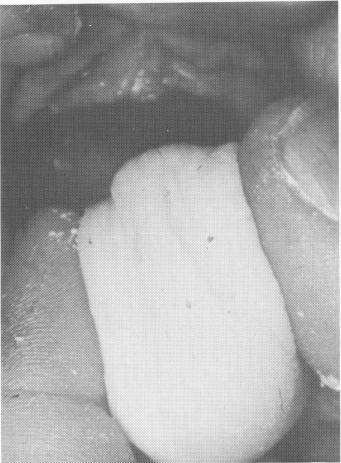
Fig. 12-73. Cold cure acrylic monomer and polymer was mixed. When it became clay-like in texture, it was manipulated over the exposed maxillary bone to reach the proper peripheral borders onto which the implant would rest.
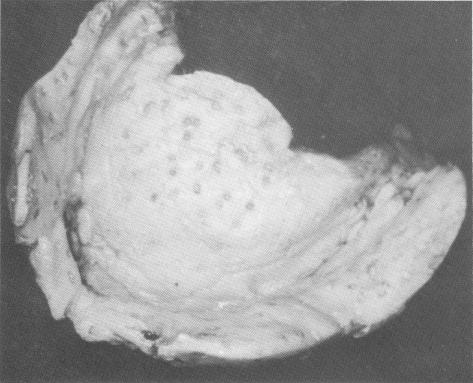
Fig. 12-74. When the acrylic tray hardened, it was trimmed and made more retentive for the rubber impression by notching its inner and outer surfaces with a round bur in a contra-angle. It was then painted with one of the rubber adhesives.
in the canine eminence and the inferior border of the anterior nasal spine. The hard bone in the region of the zygoma is also exposed so that, superiorly, the extension of the implant framework will almost reach the infraorbital foramina. Posteriorly, the peripheral border should reach up to or toward the pterygoid process.
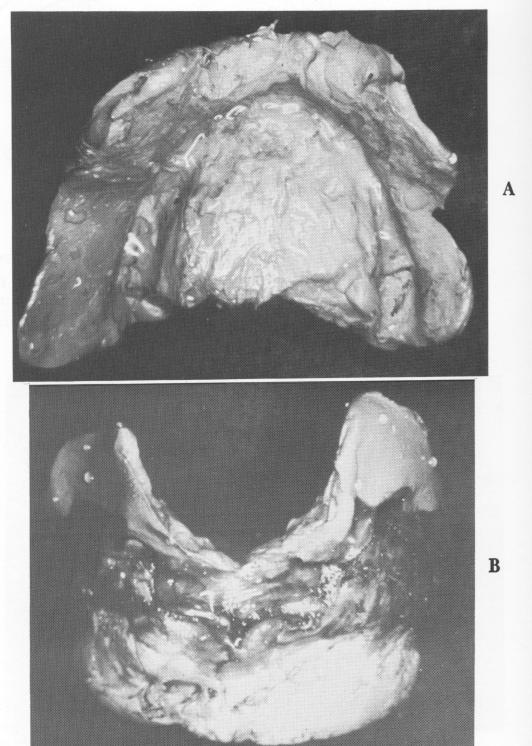
A quick cure acrylic tray is adapted to the ex-posed maxillary bone in much the same manner as in the mandible (Fig. 12-73) . The tray is trimmed, punched, and treated with adhesive (Fig. 12-74), and the rubber base bone impression is taken. It should include the hard palate, nasal spine, canine eminence, and part of the zygomatic arch (Fig. 12-75) . A surgical wax bite and elastic impression of the lower jaw are also taken. Again, Imput is now used
Fig. 12-75. A, The rubber base impression. B, The anterior extension of the rubber base (Neoplex by Surgident) impression. A wax interocclusal record of centric relation is seen attached to the lower portion of the acrylic tray.
|
Previous Page
|
Page 560 |
Next Page
|
|
Copyright warning: This information is presented here for free for anyone to study online. We own exclusive internet copyrights on all content presented on this website. We use sophisticated technology to identify and legally close down websites that reproduce copyrighted content without permission - so please don’t do it.
|