| Theories and Techniques of Oral Implantology (vol.2) (published 1970) | Dr. Leonard I. Linkow |
 Previous Page Previous Page
|
Next Page 
|
| This is an archival HTML version of this book originally hosted here in 2006. The HTML may not display well on modern browsers. Please view the modern PDF Version for a better viewing experience. |
Subperiosteal implants 547
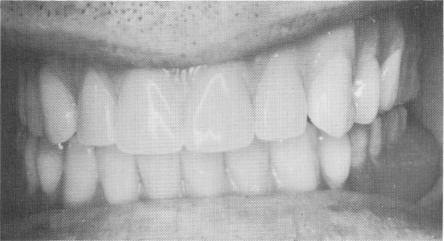
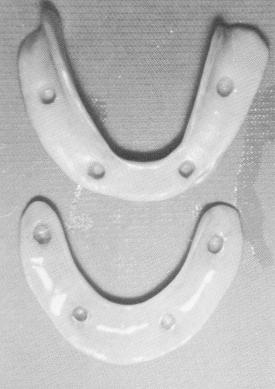
pleted, processed denture is fitted and rearticulated for high spots, prematurities, and impingements (Fig. 12-38). The teeth should be acrylic and the upper denture, if present, should also be fabricated at the same time with acrylic teeth. The differences in size between the old denture used as a temporary bridge and the implant denture can be seen in Fig. 12-39. Because the implant denture obtains its retention from the implant posts, it is never as large or as long as a conventional denture.
Follow-up
The patient should be recalled at least every 3 months for periodic check-ups regarding the fit, proper balance, and articulation of the case, if at all possible. Periodic roentgenograms of the osseous structures in relation to the implant should be taken
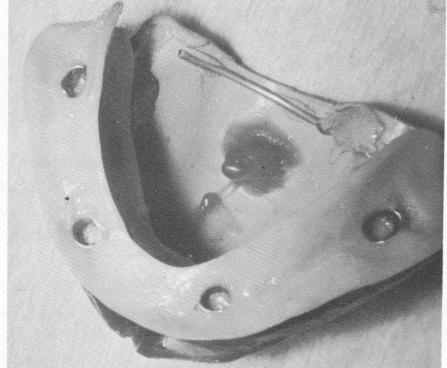
Fig. 12-37. The lower subperiosteal implant is fabricated to the metal superstructure. The upper denture is also completed.
Fig. 12-38. The completed case must be carefully balanced. No portion of the tissue surface of the implant denture must touch the fibromucosal tissue. The denture is implant-borne only.
at least once each year to check for bone resorption (Fig. 12-40).
MARZIANI'S FULL ARCH RESTORATION
A popular European method for subperiosteal implantations is that of the Italian, Marziani. Unlike the American method of designing and fitting a cast Vitallium implant over the bone, Marziani utilizes a tantalum mesh that he molds over the site in one stage. Tantalum is well tolerated by the tissues and is easily cold-worked to fit the exposed bone.
Marziani claims that his technique has two distinct advantages. First, using tantalum eliminates the inconvenient risks that exist when casting Vitallium. The tantalum is supplied in a flat sheet that is a meshwork with standardized holes (Fig. 12-41) . The abutments, also standardized, can be inserted in any desired hole. Each abutment consists of three parts: a fixation screw, a tubic pin, and a vent.
Second, only one operative procedure, rather than two, is necessary. The problems that may arise from reincising the site do not exist.
Preliminary procedures
The first steps in inserting a full lower tantalum subperiosteal implant involves taking an alginate impression of the entire lower jaw over the soft tissue. An upper impression and a wax bite are also made. A full lower denture is waxed up on the articulated model and tried in the mouth.
The tantalum meshwork is cut with metal shears
Fig. 12-39. The difference in the size of the completed implant denture (bottom) is much smaller than the temporary denture (top) that was originally the patient's standard type denture.
|
Previous Page
|
Page 547 |
Next Page
|
|
Copyright warning: This information is presented here for free for anyone to study online. We own exclusive internet copyrights on all content presented on this website. We use sophisticated technology to identify and legally close down websites that reproduce copyrighted content without permission - so please don’t do it.
|