| Theories and Techniques of Oral Implantology (vol.2) (published 1970) | Dr. Leonard I. Linkow |
 Previous Page Previous Page
|
Next Page 
|
| This is an archival HTML version of this book originally hosted here in 2006. The HTML may not display well on modern browsers. Please view the modern PDF Version for a better viewing experience. |
Endosseous blade implants 523
impressions were taken for the fabrication of a palate-less removable denture (Fig. 11-194).
In such cases, the retention of a denture over
protruding posts can be secured several ways:
1. Using only a functional grip of acrylic
2. Processing 360-degree clasps joined together with a connecting bar directly inside the denture (The metal superstructure is fabricated at the same time that the implant casting is made and in the same manner and form that superstructures are made for subperiosteal implants.)
3. Fabricating metal copings of gold or Vitallium
to fit snugly to the protruding posts and fastening them directly inside the denture
4. Including Gerber, Ceka, or internal clip bars for retentive purposes
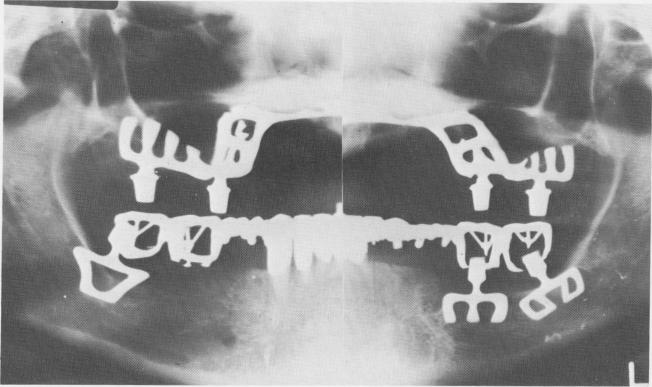
Here, a frictional grip of acrylic was used (Fig. 11-195) . The palateless denture was carefully articulated and balanced (Fig. 11-196). The Panorex x-ray of the completed case shows not only the maxillary palatal bar horseshoe blade implant but also a full arch mandibular splint supported by three posterior blade implants functioning successfully over 18 months previously to the upper restoration (Fig. 11-197).
Fig. 11-197. Note how the maxillary blade circumvents the sinuses. The mandibular restoration was done 18 months previously and was of the earlier prefabricated type. (From Linkow, L. I.: Status of oral implants, 1969, Inform. Odontostomat., Vol. 1, 1969.)
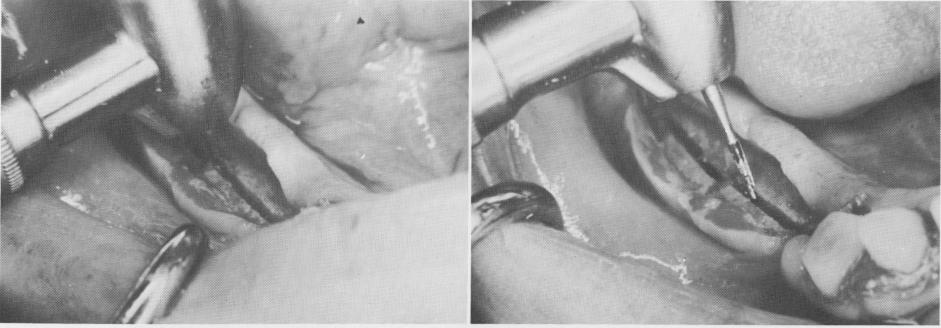
Fig. 11-198. Making a proper groove for a blade implant. A, The groove must be deep enough to accept the entire body of the blade. To do this, it is often necessary to drive the No. 700L fissure bur down to midshank. B, Note that although the groove may be deep, its buccolingual width is kept narrow to ensure firmly wedging the blade.
|
Previous Page
|
Page 523 |
Next Page
|
|
Copyright warning: This information is presented here for free for anyone to study online. We own exclusive internet copyrights on all content presented on this website. We use sophisticated technology to identify and legally close down websites that reproduce copyrighted content without permission - so please don’t do it.
|