| Theories and Techniques of Oral Implantology (vol.2) (published 1970) | Dr. Leonard I. Linkow |
 Previous Page Previous Page
|
Next Page 
|
| This is an archival HTML version of this book originally hosted here in 2006. The HTML may not display well on modern browsers. Please view the modern PDF Version for a better viewing experience. |
486 Theories and techniques of oral implantology
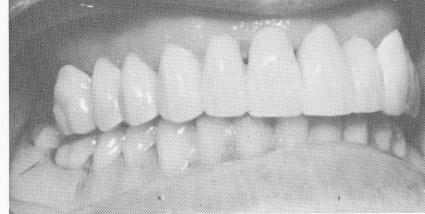
Fig. 11-74. After complete healing, the prosthesis was affixed with hard cement.
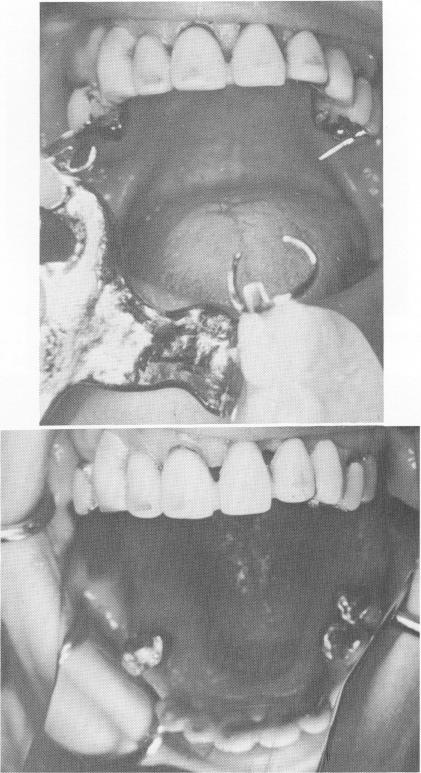
Fig. 11-76. Preoperative views of periodontally involved teeth that helped support a removable appliance.
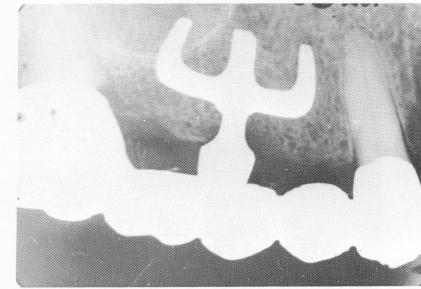
Fig. 11-75. An x-ray of the completed case. Because this maxilla was unusually dense, an open-ended implant was used. (From Linkow, L. I.: The blade vent, a new dimension in endosseous implantology, Dent. Concepts 11:3-18, 1968.)
A periapical radiograph reveals the depth to which the blade was seated (Fig. 11-75) .
Case 7
Stabilizing periodontally involved teeth with blade implants
No other implant is as useful for supporting periodontally involved abutment teeth as is the blade-vent. Because its mesiodistal length makes it impossible to rotate in its site, it has greater immediate stability than either post or pin type implants. In this case five periodontally involved teeth were helping to support a poorly functioning removable appliance (Fig. 11-76). The old crown restorations were re-moved and the rernaining teeth were reprepared (Fig. 11-77). Impressions of them were taken for fabricating metal copings for porcelain bridge-work.
Three blade-vents were determined for sup-ports. To insert each, the mucoperiosteal tissue was carefully incised and reflected. Each blade was set in its groove and tapped into its respective position in the bone (Fig. 11-78).
The castings with their already soldered pontics were set over the prepared abutment teeth, and the tissues around the three implants were sutured (Fig. 11-79). Aluminum shells of the proper size were festooned to fit over the implant posts. Compound stick wax was softened and placed inside each shell, and impressions of the posts were taken. The shells were then trimmed and placed back over the implant posts (Fig. 11-80). A wax interocclusal record of centric relation and full mouth plaster index were then taken of the upper arch, picking up the
|
Previous Page
|
Page 486 |
Next Page
|
|
Copyright warning: This information is presented here for free for anyone to study online. We own exclusive internet copyrights on all content presented on this website. We use sophisticated technology to identify and legally close down websites that reproduce copyrighted content without permission - so please don’t do it.
|