| Theories and Techniques of Oral Implantology (vol.2) (published 1970) | Dr. Leonard I. Linkow |
 Previous Page Previous Page
|
Next Page 
|
| This is an archival HTML version of this book originally hosted here in 2006. The HTML may not display well on modern browsers. Please view the modern PDF Version for a better viewing experience. |
Endosseous blade implants 465
er as it is tapped deeper. It compresses the alveolar bone flanking it on its buccal and lingual surfaces, reducing the bone's porosity and making it denser. There is little danger of compressing the bone too much because of the honeycombed character of the alveolar bone. When the shoulders of the implant rest from 1 to 2 mm. below the cortical plates, the implant has been inserted deeply enough (Fig. 11-9) . A radiograph is taken to confirm this (Fig. 11-10).
5. Two or three interrupted sutures are all that
are needed to close the incised edges of the soft tissues (Fig. 11-11). The tissues must cover the entire superior portion of the blade—both the anterior and posterior shoulders and the neck portion of the blade.
6. The temporary splint is seated over implant and prepared tooth abutments (not required).
7. The sutures are removed 4 to 5 days later, and the final prosthesis is fitted and checked carefully for good occlusion and soft tissue adaptation. The site is again x-rayed with the prosthesis in place
A, B
D, E
G, H
J, K
M, N
C
F
I
L
0
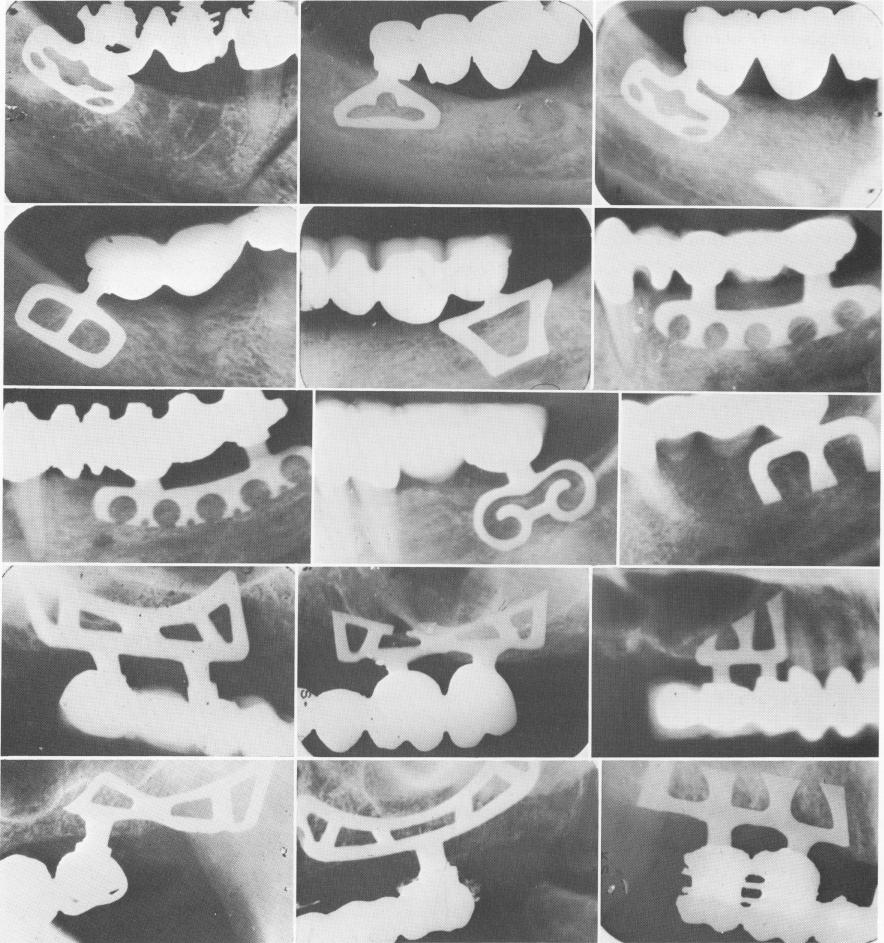
Fig. 11-14. A to I, Blades for free-end saddle areas. J to 0, Blades for maxillary sinus areas.
|
Previous Page
|
Page 465 |
Next Page
|
|
Copyright warning: This information is presented here for free for anyone to study online. We own exclusive internet copyrights on all content presented on this website. We use sophisticated technology to identify and legally close down websites that reproduce copyrighted content without permission - so please don’t do it.
|