| Theories and Techniques of Oral Implantology (vol.2) (published 1970) | Dr. Leonard I. Linkow |
 Previous Page Previous Page
|
Next Page 
|
| This is an archival HTML version of this book originally hosted here in 2006. The HTML may not display well on modern browsers. Please view the modern PDF Version for a better viewing experience. |
Maxillary endosseous implant interventions 447
lous maxilla were made (Fig. 10-223), then the template was designed on the master stone model (Fig. 10-224). The finished template with holes for the implants was coated with a denture adhesive and placed over the fibromucosa. While the tern-plate was secured with one hand, the pins were inserted through the holes (Fig. 10-225).
The pins were affixed together with acrylic and the hardened acrylic cores prepared for full crown restorations (Fig. 10-226). An elastic impression material was used to take an impression of the pre-pared acrylic cores. A wax interocclusal record of centric relation was made, and the master stone model was poured (Fig. 10-227). A one-piece full arch mesostructure that included copings for the acrylic cores soldered together with a connecting bar was then waxed and cast. It was fitted in the mouth over the acrylic cores (Fig. 10-228) .
Another elastic impression was taken of the entire maxilla, and the connecting bar mesostructure was picked up with the impression. From these a
palateless denture with internal clip bars was fabricated (Fig. 10-229) .
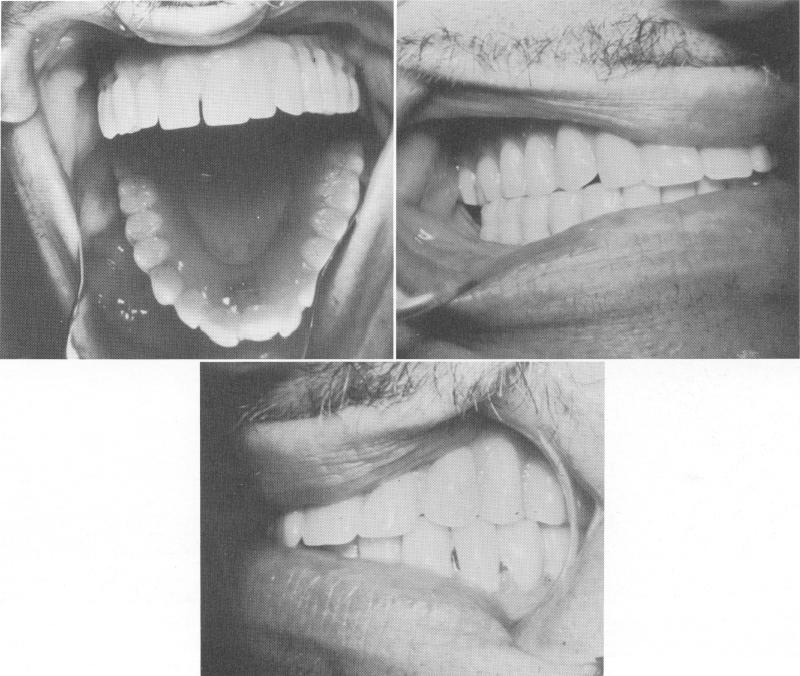
The connecting bar mesostructure was then cemented with hard cement over the acrylic cores. The palateless denture was once again placed in the mouth and rearticulated for any occlusal adjustments (Fig. 10-230) .
Case 25
A fixed full arch denture using mixed implants and a template
After numerous attempts to use triplants as the only implant design in the edentulous maxilla, it became obvious that triplants could not hold up with-out some other type of support. Templates were tried, and although they prolonged the life of the prosthesis a few months by reducing the types of motion that tend to dislodge an implant, they could not adequately compensate for a basic flaw in the triplant. Unlike post type implants and the blade-vent, which becomes tightly bound by bone that
Fig. 10-230. The finished case.
|
Previous Page
|
Page 447 |
Next Page
|
|
Copyright warning: This information is presented here for free for anyone to study online. We own exclusive internet copyrights on all content presented on this website. We use sophisticated technology to identify and legally close down websites that reproduce copyrighted content without permission - so please don’t do it.
|