| Theories and Techniques of Oral Implantology (vol.2) (published 1970) | Dr. Leonard I. Linkow |
 Previous Page Previous Page
|
Next Page 
|
| This is an archival HTML version of this book originally hosted here in 2006. The HTML may not display well on modern browsers. Please view the modern PDF Version for a better viewing experience. |
Maxillary endosseous implant interventions 435
try the prosthesis over each implant and to hollow out its corresponding pontic before going on to the next implant.
After all the vent-plants were seated (Fig. 10-183) and the bridge with its hollowed pontics fitted properly over them, the operator had two choices. He could have fashioned acrylic lumens by placing cold cure acrylic within the hollowed pontics and repeatedly seated over Vaseline-covered implant shafts. On the other hand, he could have used interchangeable gold copings over the implant shafts,
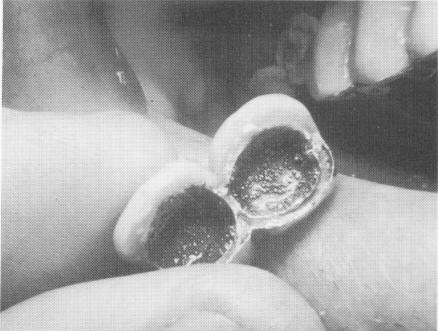
Fig. 10-185. The pins were fastened with acrylic on both sides and the superstructures were cemented over the acrylic cores. In this case, acrylic was used inside the superstructure to secure them.
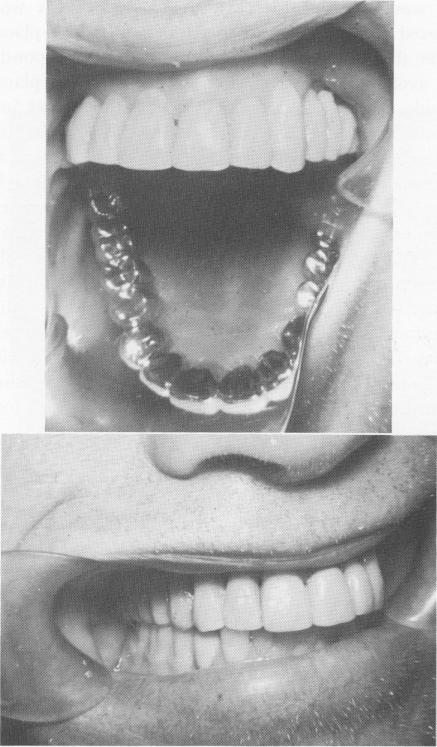
Fig. 10-186. The completed case.
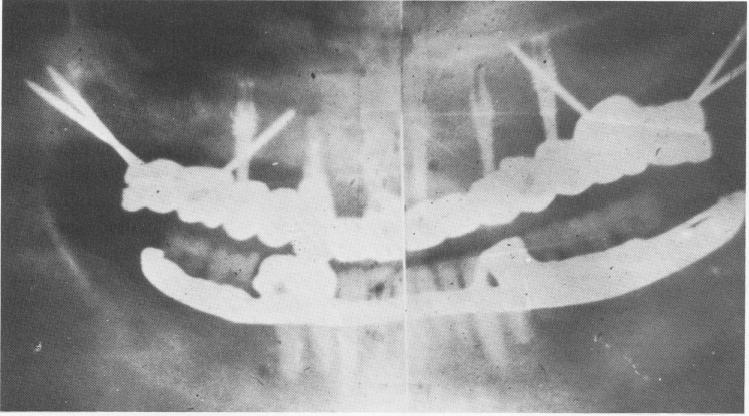
Fig. 10-187. A Panorex of the completed case showing the vent-plants and the tremendous spread of the tripodial pins, which were used to avoid the broad and low-flaring maxillary sinus.
|
Previous Page
|
Page 435 |
Next Page
|
|
Copyright warning: This information is presented here for free for anyone to study online. We own exclusive internet copyrights on all content presented on this website. We use sophisticated technology to identify and legally close down websites that reproduce copyrighted content without permission - so please don’t do it.
|