| Theories and Techniques of Oral Implantology (vol.1) (published 1970) | Dr. Leonard I. Linkow |
 Previous Page Previous Page
|
Next Page 
|
| This is an archival HTML version of this book originally hosted here in 2006. The HTML may not display well on modern browsers. Please view the modern PDF Version for a better viewing experience. |
148 Theories and techniques of oral implantology
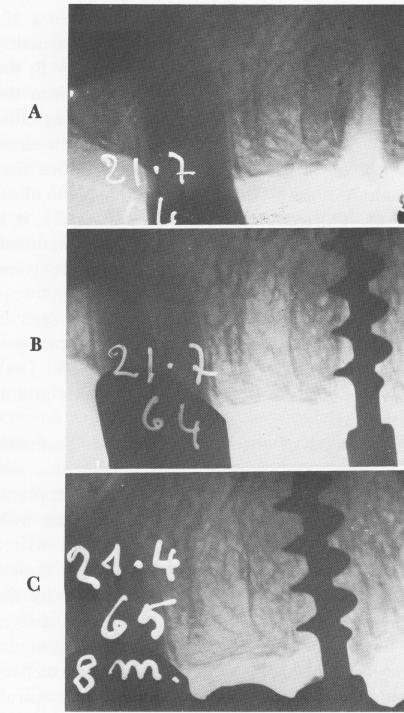
Fig. 5-23. A Tramonte implant successfully used in an open socket. A, The fresh socket after tooth extraction; B, the implant after insertion. Note that the implant fills the socket and engages bone; it does not float in the site. C, Eight months postoperatively bone has filled in around the securely braced implant. (From Tramonte, S.: L'implanto endosseo razionale, Milan, 1963.)
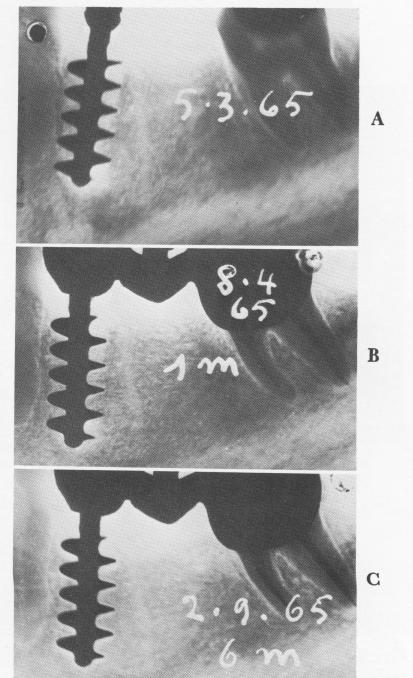
Fig. 5-24. Although the threads are at the alveolar crest, bone has grown around the lower portion of this well-stabilized Tramonte implant. A, Implantation soon after ex-traction of a root with a large granuloma; B, 1 month postoperatively; C, 6 months postoperatively. (From Tramonte, S.: L'implanto endosseo razionale, Milan, 1963.)
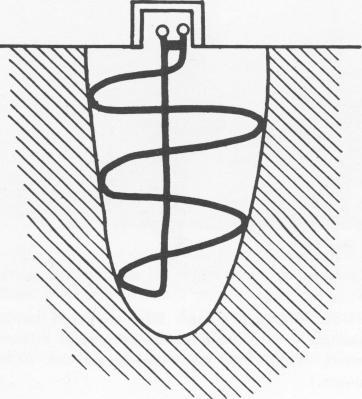
Fig. 5-25. Formiggini's first implant design. The implant was a wire twisted back upon itself. Bone was to surround the resulting spires, giving good retention.
|
Previous Page
|
Page 148 |
Next Page
|
|
Copyright warning: This information is presented here for free for anyone to study online. We own exclusive internet copyrights on all content presented on this website. We use sophisticated technology to identify and legally close down websites that reproduce copyrighted content without permission - so please don’t do it.
|