| Theories and Techniques of Oral Implantology (vol.1) (published 1970) | Dr. Leonard I. Linkow |
 Previous Page Previous Page
|
Next Page 
|
| This is an archival HTML version of this book originally hosted here in 2006. The HTML may not display well on modern browsers. Please view the modern PDF Version for a better viewing experience. |
264 Theories and techniques of oral implantology
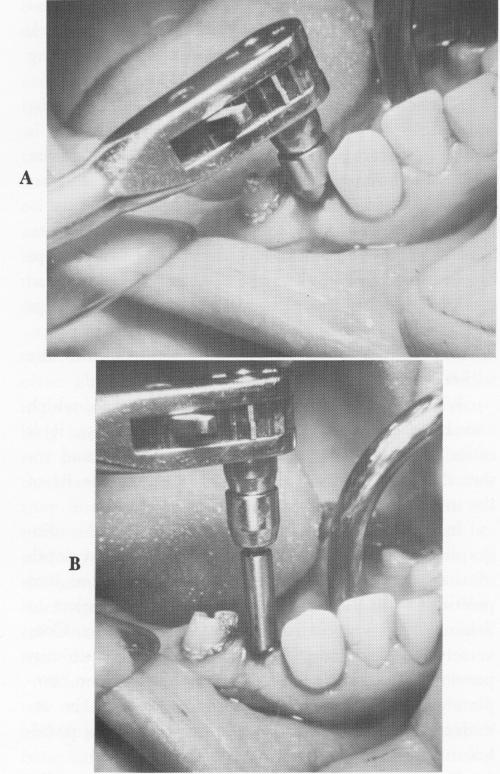
Fig. 7-13. Using a prolongator raises a ratchet head above interfering teeth. A, The normal size prolongator. B, A longer prolongator sometimes has to be used for deeper insertion.
spiral-shaft implant, the implant should be backed out and the site retapped. If any implant breaks during insertion it should be removed. An implant generally breaks at the beginning of the spires, where a safety weak point was created. The implant can be removed by introducing a very thin, flat instrument inside the spires and turning it counterclockwise. If the implant cannot be removed in this manner, a surgical flap should be made to get at the implant. In such a situation, another implant should not be placed back in the same socket unless it has a wider diameter.
If an implant is loose from the very onset, it must be removed, since it will eventually fail. Also, a loose implant usually brings discomfort to the patient. A loose fit is usually caused by inaccurate and sloppy boring with the burs or taps. It may also result from choosing a porous area as an implant site in the first place or from perforating an outer plate of bone while inserting the implant. An implant may also rapidly loosen if the bone has been overheated by using dull cutting instruments and omitting the use of a cool water spray.
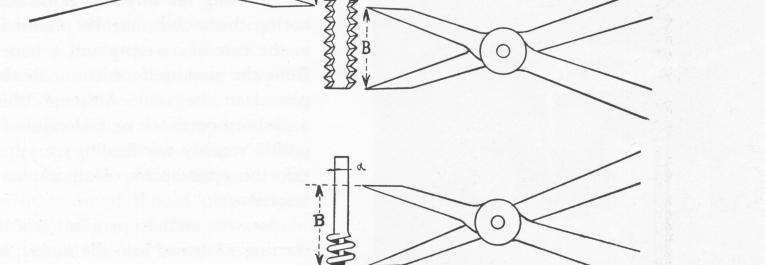
Ensuring the correct height of the abutment post. No more than 4 to 5 mm. of the implant shaft should protrude through the mucosa into the oral cavity. This allows just enough shaft for the fixation of the prosthesis. Ensuring the correct amount of protrusion should begin with the selection of the implant. The total height of the implant should include the length of the spires and that portion of the implant that should rest in bone, plus the height of the extratissular shaft. Before setting the implant into its position, the proper height of each section
Fig. 7-14. Measurements made on the tap can be used to determine the intraosseous length of the implant.


|
Previous Page
|
Page 264 |
Next Page
|
|
Copyright warning: This information is presented here for free for anyone to study online. We own exclusive internet copyrights on all content presented on this website. We use sophisticated technology to identify and legally close down websites that reproduce copyrighted content without permission - so please don’t do it.
|