| Theories and Techniques of Oral Implantology (vol.1) (published 1970) | Dr. Leonard I. Linkow |
 Previous Page Previous Page
|
Next Page 
|
| This is an archival HTML version of this book originally hosted here in 2006. The HTML may not display well on modern browsers. Please view the modern PDF Version for a better viewing experience. |
302 Theories and techniques of oral implantology
Fig. 7-85. When the implant is failing in a two-unit splint, it is necessary only to separate the two crowns and remove the implant.
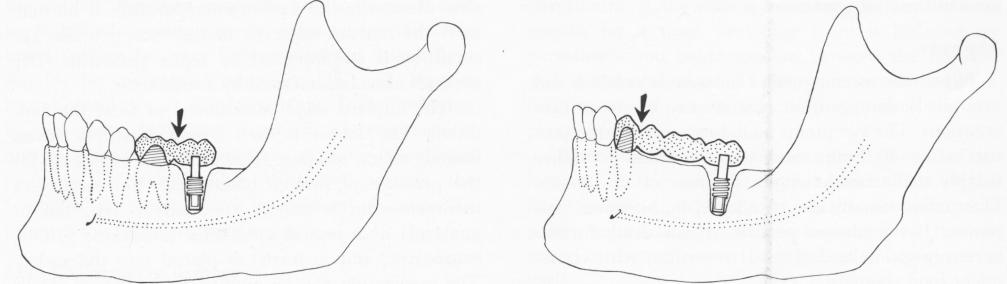
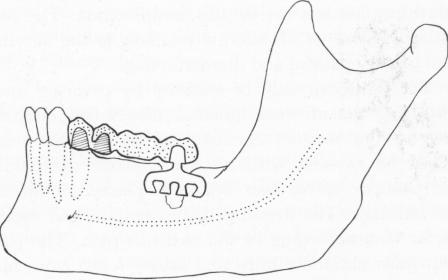
Fig. 7-87. A, When immediate reimplantation with a blade is possible, the pontic nearest the anterior abutment crown is prepared for an atypical full crown restoration. B, The prepared pontic nearest the anterior abutment tooth be-comes the first unit in the new restoration.
Failing post type implants
The usual instruments required are a wide- or narrow-nosed pliers, sometimes various shaped ex-
traction forceps, a scalpel, periosteal elevator, fissure bur, carborundum disk, and a contra-angle with a
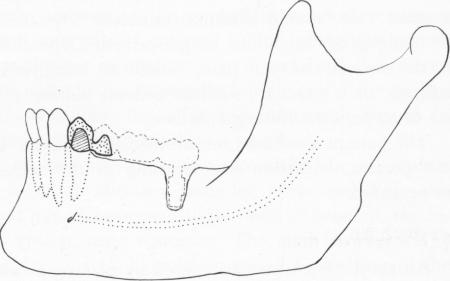
Fig. 7-86. If immediate reimplantation is not possible, the restoration should be removed by severing the most anterior pontic.
water attachment. A local anesthesia and syringe are also necessary.
If a bridge or superstructure has not been cemented permanently over the implant, the implant may be removed simply by simultaneously twisting it in a counterclockwise direction and by pulling it out of the bone with pliers. Because the implant is loose, it should come out easily unless the spirals or vent are wrapped with fibrous tissue or granulation tissue. If this is the case, a scalpel should be used to sever the tissues.
If the prosthesis has been cemented over the implant with hard cement, then another course must be followed. For example, if the implant was the posterior abutment for a short-span fixed partial denture, the crown covering it should be separated from the rest of the bridge by severing its mesial proximal surface from the restoration directly anterior to it with a carborundum disk used in a straight handpiece with a water attachment (Fig. 7-85). The crown and implant are then removed simultaneously in a counterclockwise direction by pulling outward with a molar extraction forceps.
If several cantilevered pontics are involved, they should all be removed to avoid weakening the remaining abutment tooth or teeth. In such a situation, the most anterior cantilevered pontic may be severed and the entire restoration removed intact with the implant crown (Fig. 7-86), or the implant crown may be removed first, then the remainder of the restoration.
In posterior abutment situations, 6 months to 1 year must elapse before using another post type implant in the same area. Or, preferably, a blade implant can be used immediately to span the open socket. If this is possible, the nearest anterior pontic
|
Previous Page
|
Page 302 |
Next Page
|
|
Copyright warning: This information is presented here for free for anyone to study online. We own exclusive internet copyrights on all content presented on this website. We use sophisticated technology to identify and legally close down websites that reproduce copyrighted content without permission - so please don’t do it.
|