| Theories and Techniques of Oral Implantology (vol.1) (published 1970) | Dr. Leonard I. Linkow |
 Previous Page Previous Page
|
Next Page 
|
| This is an archival HTML version of this book originally hosted here in 2006. The HTML may not display well on modern browsers. Please view the modern PDF Version for a better viewing experience. |
92 Theories and techniques of oral implantology
Pasqualini on hollow core implants
Purely to determine which type of implant—hollow core or solid cylinder—more advantageously utilizes bone's stabilizing potential, the Italian practitioner Pasqualini buried several implant designs in dogs' jaws (Fig. 4-14). His hollow designs varied in overall shape, and therefore method of insertion,
and in the amount of space in the open part of the implant (Fig. 4-15). Cross sections showed that bone grows close enough to the periphery of the implants to define their shapes (Fig. 4-16). In many of the cases, usually where the hollow portions were fairly large, bone grew completely through the hollow cores (Fig. 4-17).
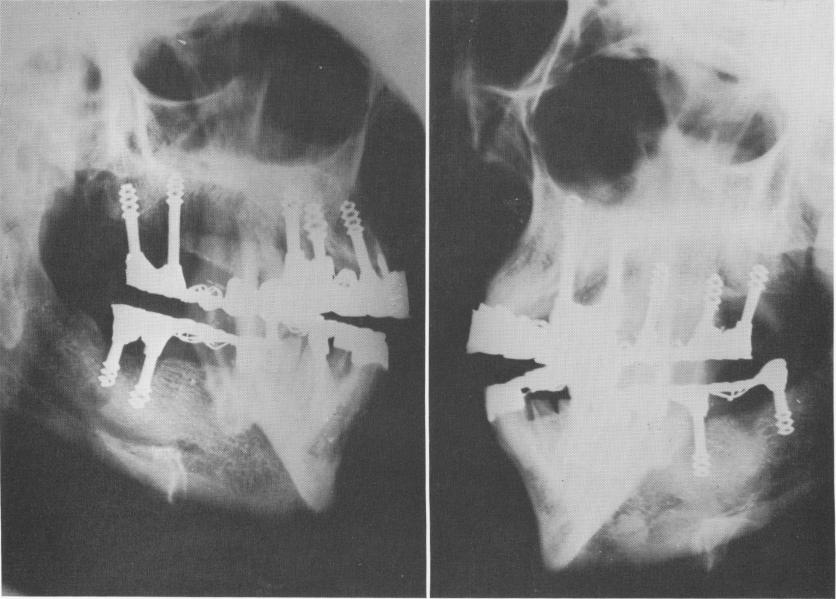
Fig. 4-18. Chercheve's spiral-post implants in both the mandible and maxillae.
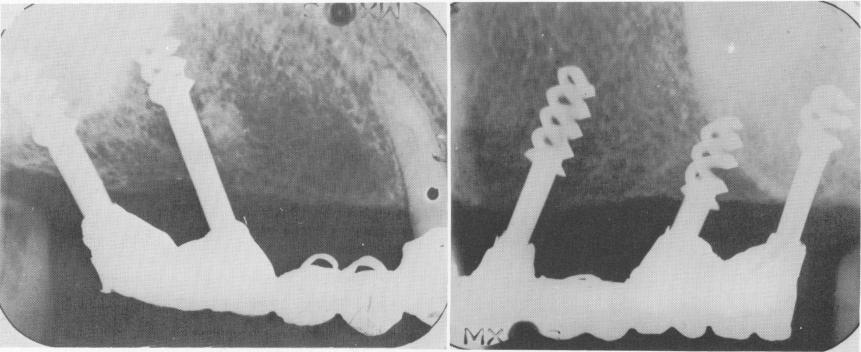
Fig. 4-19. Radiographs taken 3 years postoperatively. The implants are secure in bone and no pathologic areas are seen.
|
Previous Page
|
Page 92 |
Next Page
|
|
Copyright warning: This information is presented here for free for anyone to study online. We own exclusive internet copyrights on all content presented on this website. We use sophisticated technology to identify and legally close down websites that reproduce copyrighted content without permission - so please don’t do it.
|