| Maxillary Implants (published 1977) | Dr. Leonard I. Linkow |
 Previous Page Previous Page
|
Next Page 
|
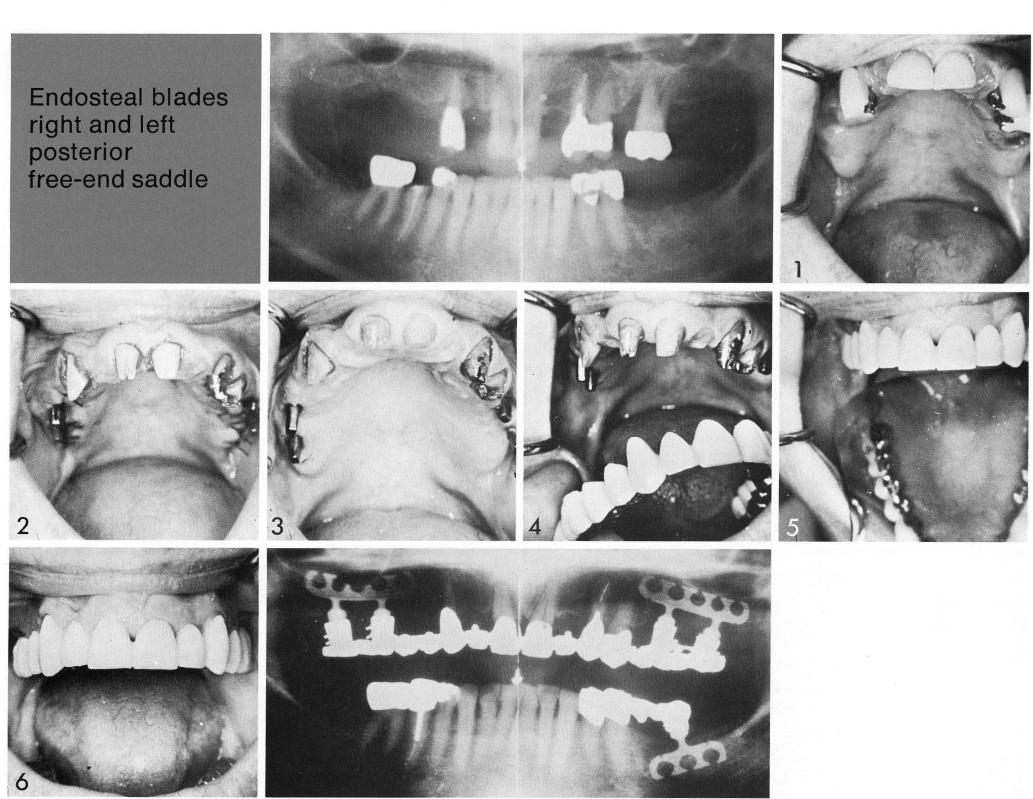
Endosteal blades.,
right and left posterior
free-end saddle
Originally it was hoped that a special shallow bladevent design could be used successfully in many cases with a low-flaring sinus. However, the shallow design has proven one of the least successful, principally because the loss of bone mass that precedes volume loss leaves very few, very fragile trabeculae under the sinus for blade-vent contact. Therefore a pterygoid extension type implant is preferred if a deep-bodied bladevent design can-not be used. Despite the drawbacks, a few shallow bladevent cases have succeeded, most noteworthy those with strong abutments in other sites. Here the natural teeth (1) and bladevents (2,3) are used. The right bladevent has been "customized" by cutting down its central legs to accommodate a particularly low drop in the sinus. Notice the change in the gingivae after the case was completed, compared to the poor periodontal and gingival condition of the patient while wearing a partial denture.
210
|
Previous Page
|
Page 210 |
Next Page
|
|
Copyright warning: This information is presented here for free for anyone to study online. We own exclusive internet copyrights on all content presented on this website. We use sophisticated technology to identify and legally close down websites that reproduce copyrighted content without permission - so please don’t do it.
|