| Theories and Techniques of Oral Implantology (vol.2) (published 1970) | Dr. Leonard I. Linkow |
 Previous Page Previous Page
|
Next Page 
|
| This is an archival HTML version of this book originally hosted here in 2006. The HTML may not display well on modern browsers. Please view the modern PDF Version for a better viewing experience. |
500 Theories and techniques of oral implantology
B
D
F
A
C
E
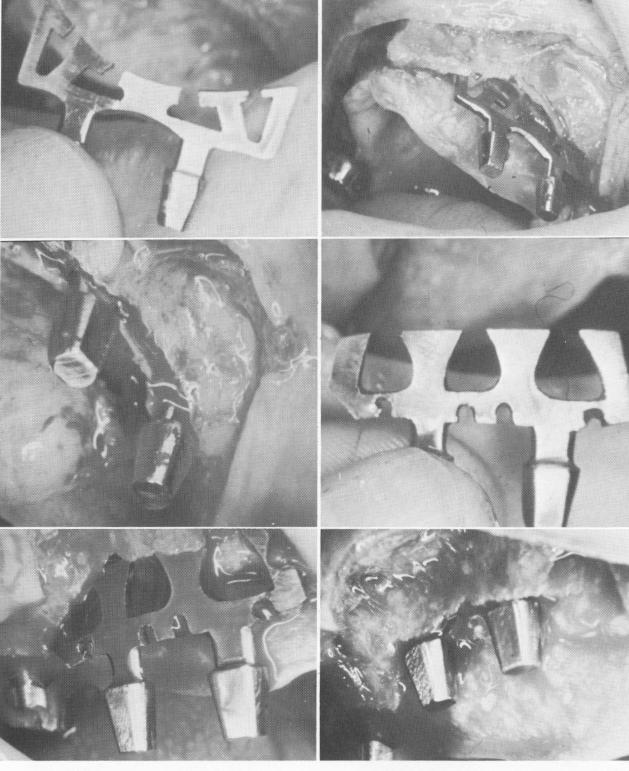
Fig. 11-125. A to C, A double-posted implant, bent to conform to the groove of the ridge, was inserted on each side. This is the left implant. D to F, The right implant, grooved accordingly, was inserted. Because of its unique design, a single blade may be used in the area rather than several post type implants.
to expose enough of the bone to determine the mode of approach (Fig. 11-121) .
The alveolar bone had resorbed to a tremendously sharp knife-edge ridge around the entire arch (Fig. 11-122). In its current state, it was impossible to place any type of implant in such a ridge. However, a re-evaluation of the intraoral and extraoral radiographs indicated that there would still be enough alveolar bone height from the floor of the antrum to the knife-edge ridge if the table were flattened by removing 2 or 3 mm. of the sharp edge of the ridge. Therefore the ridge was filed shorter and rounded, automatically making the crest thicker buccopalatally (Fig. 11-123).
A narrow groove was made with extreme care
on each side of the arch with a No. 700L fissure bur to bisect the buccopalatal width of the alveolar crest. The two grooves were also curved to follow the arch (Fig. 11-124). Two long, double-posted blade implants were bent to conform to the curved grooves, inserted, and tapped into the bone (Fig. 11-125). The incised tissues were sutured closed (Fig. 11-126).
A temporary acrylic splint fabricated from an alginate impression taken of the patient's old denture was cold-cured in the mouth, trimmed, and cemented into place with one of the soft tone conditioners (Fig. 11-127).
Six days later the sutures were removed (Fig. 11-128). Two gold copings were placed over the molar crown preparations, and acrylic copings were
|
Previous Page
|
Page 500 |
Next Page
|
|
Copyright warning: This information is presented here for free for anyone to study online. We own exclusive internet copyrights on all content presented on this website. We use sophisticated technology to identify and legally close down websites that reproduce copyrighted content without permission - so please don’t do it.
|