| Mandibular Implants (published 1977) | Dr. Leonard I. Linkow |
 Previous Page Previous Page
|
Next Page 
|
being that the neck broke off half way from the body of the blade. It was possible to expose the remaining portion of the neck, fig. 217, and by filling one of the prefabricated plastic copings with cold cure acrylic, fig. 218, which was picked up with an elastic impression, fig. 219.
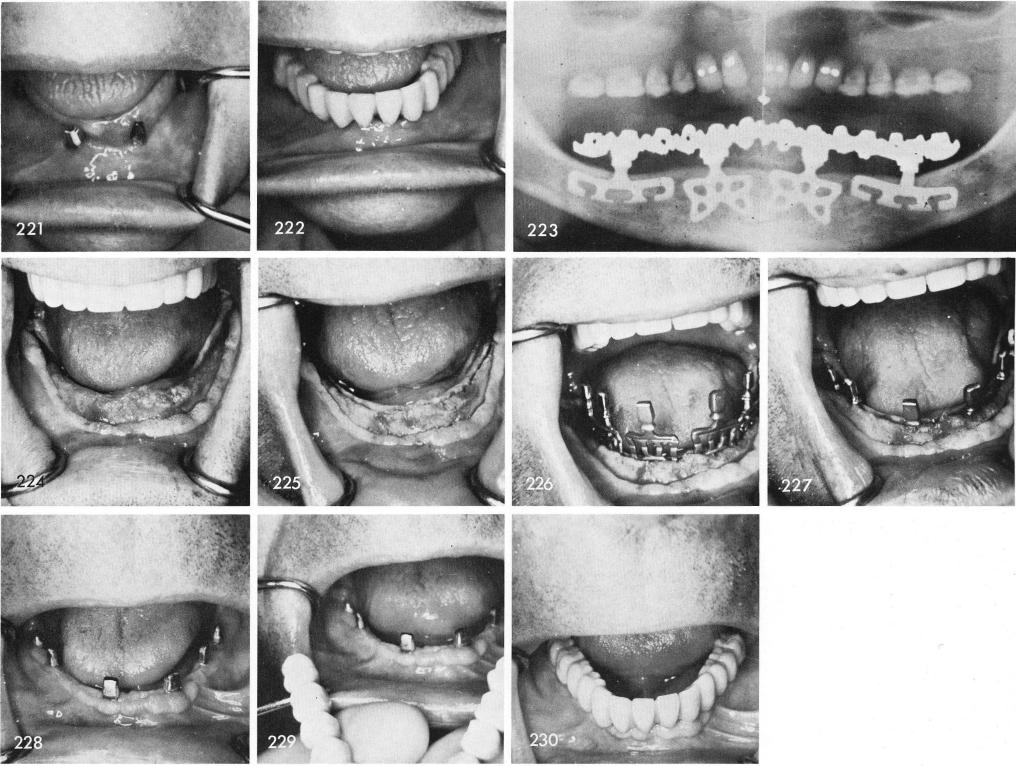
A new prosthesis was processed with the new gold post, fig. 220, that fitted exactly over the remaining portion of the neck and fitted accurately inside the cuspid crown. Fig. 221 shows the new right cuspid post cemented over the broken neck of the blade to help support the new prosthesis, fig. 222. A nine year x-ray shows the case to be working out very well, fig. 223.
When the alveolar bone is dense and thick I often use my newer designed blades which are slightly wider bucco-lingually than the original most widely used titanium blades, fig. 224. The grooves are made in a similar manner but must be made extremely deep and sometimes even slightly widened, fig. 225, to accommodate the broader type blades, figs. 226, 227. The healing is magnificent and the retention of these blades in bone is unsurpassed, fig. 228. A full arch fixed prosthesis is then cemented to place, figs. 229, 230. The post-operative x-ray, fig. 231.
237
|
Previous Page
|
Page 237 |
Next Page
|
|
Copyright warning: This information is presented here for free for anyone to study online. We own exclusive internet copyrights on all content presented on this website. We use sophisticated technology to identify and legally close down websites that reproduce copyrighted content without permission - so please don’t do it.
|